
Landscape architecture designed by trees.
Seen from space, Earth looks like a big garden wrapped in the surreal atmosphere of existence. Reality flips at night when city lights sparkle like stars, and between them are huge dark spaces that those points can't light up: those are forests. At sunrise, those lights fade into the light of the new day, and as you descend, the image becomes clearer and more defined: the blue of the sea, the yellow of the deserts, and the green of the trees emerge. It is the architecture of the landscape designed by nature.
Flying even lower, you get into more detail and then you fly over an urban area dotted with the colors of modernity, and when the color becomes vast and uniform, the city becomes a park. Field maple, southern ash, ginkgo biloba, mulberry, holm oak, willow, lime, black walnut, black poplar, red oak, English elm: chosen by man, they adapt to all types of environments and leave the imprint of their family on the landscape.
This is the architecture of the landscape designed by planners.
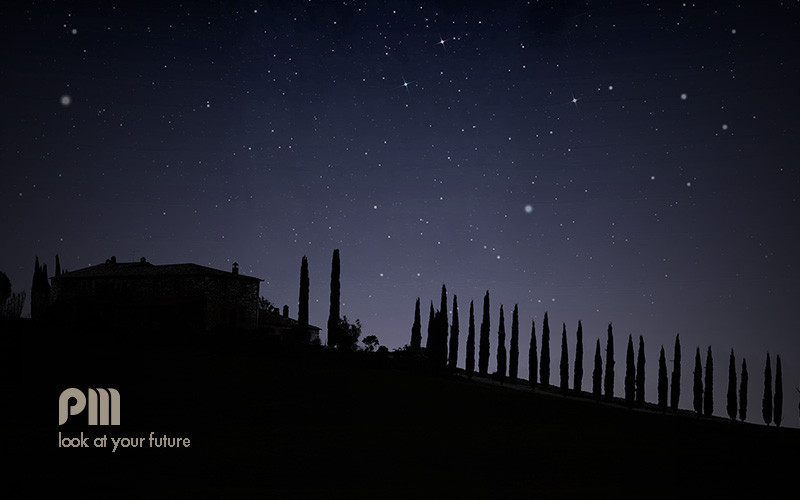
They study the morphology of the terrain, the context of the place above and around it, and the needs of each tree so that it can grow in a habitat that is no longer natural but man-made. Aesthetics and order are the objectives of the landscaping project, where trees are the pillars of a large open-air room. Inside, the columnar shape of a birch tree frames a glimpse of the landscape, cypress trees arranged on several sides enclose an ornamental space, and a long row of poplars divides one area of the park from another.
Seen from below, at their feet, the trees look like complex sculptures, monuments that bear witness to the passage of time, remaining still in the same place while moving, unnoticed, upwards. Fastigiate, ovoid, umbrella-shaped, conical, globular, weeping, spreading, pyramidal: they do not grow randomly, but follow their own architectural models with first, second, and third order branches. The main branch extends from the trunk, the vigorous branch makes its way to the right, and the secondary branch makes room for itself from the fork: it overlaps the branch above it to create more density, while a little higher up, the double top appears, not far from the apex.
This is the architecture of the tree designed by the species.


