
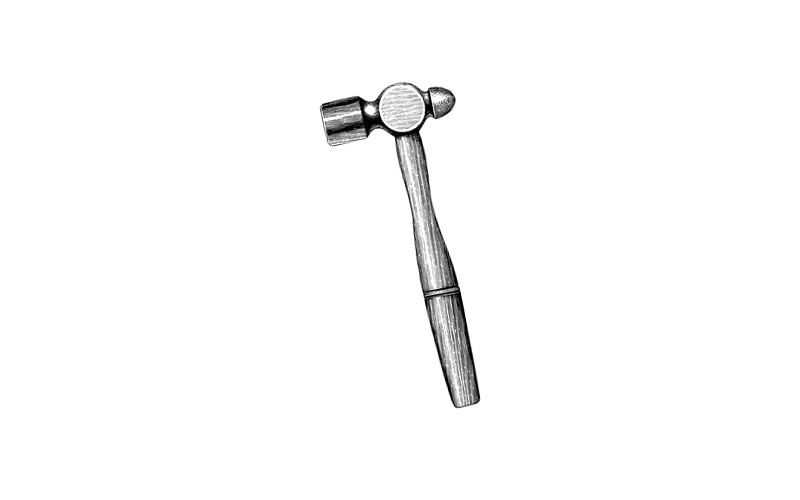
The Hammer
“It can crush your finger.”
To deliver a well-aimed blow, you need to grip the end of the handle firmly, which is usually made of wood, the only material capable of absorbing the vibrations of the impact. The solid cast or forged steel head strikes the target flatly with its flat side, while the other side of the pen can take on different shapes depending on the type of work to be done.
In many cases, it is forked, like a tongue, with flat edges to hook the nail under the head and pull it out of the surface of a board or plank where it has been driven in. In other versions of the hammer, the wide, curved spatula shape of the pen is used to distribute glue evenly under the veneer, the thin layer of fine wood to be laid over common wood surfaces. The carpenter will tap the surface of the veneer with the head of the hammer to position it, and use the claw to remove any excess glue that comes out from the edges.
But whatever the job, never loosen your grip on this carpentry tool: the hammer must always be held firmly, even when tapping lightly on the surface of the wood to level a piece of furniture, to adjust the assembly of the components of a window frame, or to fit the parts of a wardrobe together. In these cases, you will need to use a mallet, a two-headed hammer made entirely of solid wood, usually white oak or birch, which is also used to adjust the blades of planes or for cabinetmaking.
After all, whether the blow is struck with force or delicacy, the weight of a hammer is proportional to the weight of the piece being worked on: the heavier it is, the more the blow will affect the surface struck by the force transmitted to the handle and transformed into impact energy. This is perhaps why, given the weight of the decisions to be made in a courtroom, in the United States the blow at the end of the sentence pronounced by the judge is struck with a wooden hammer.


