
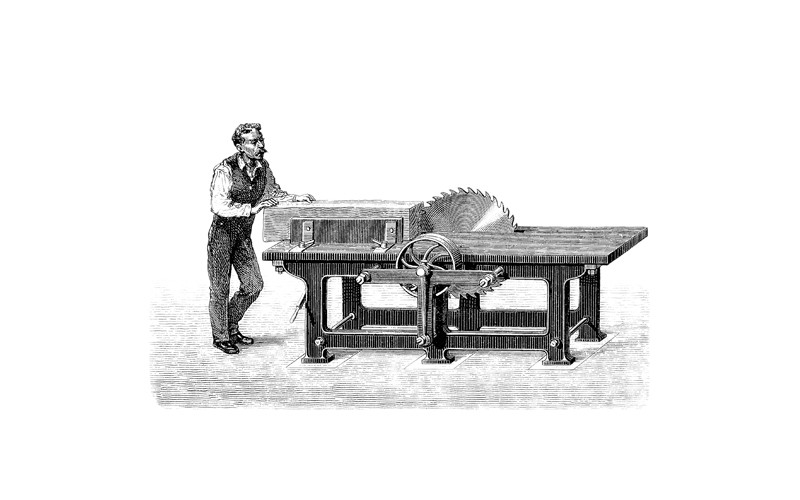
The Master Carpenter
“...they say he created the world”
First learn to feel the wood with your hands, in that moment of contact with its surface that is like a handshake when two strangers meet: on one side the raw material, on the other the person who will work it.
This distinctive human trait gives rise to a vocation that is handed down from father to son and continues to pass through the generations, thanks to a craftsmanship that advances day after day, curiously pursuing its growth to the point of transforming a workshop apprentice into a master carpenter.
In between lies a dedication to one of the oldest crafts in the world, which has spanned civilizations and peoples of all times and places: carpenters used wood to build stilt houses in the Bronze Age, wood was used to make the first doors in Ancient Egypt, and wood was relied upon to install windows and finish roofs in buildings during the Roman era.
Then he learns to identify with the tools of the trade, spending all his time in close contact with the instruments of a job that, despite being equipped with tools that require strength to wield, manages to retain the most human of definitions: a job done by hand. In practice, the carpenter is one with the drill, the saw, the screwdriver, the hammer, the vices, the clamps, the chisels, and the gouges, which, precisely because of his ability to identify with them—or our imagination—are each in turn an extension of his person.
Putting them back in order at the end of the day on the master carpenter's workbench is a sign of respect for his craft, but not before measuring, cutting, drilling, planing, milling, sawing, gluing, fixing, nailing, and screwing, whether for small repairs or large projects.
Those gestures embody all the memory of a craft, and their daily repetition is the acquisition of a mastery that means that when someone wants to entrust a job to the right person, they call a carpenter.


